

A manufacturing company selects an AI platform from a major cloud provider. The onboarding is smooth, the first models train quickly, and the early results look promising. Eighteen months later, the picture has changed. The company's production data lives exclusively in that provider's cloud. The models run on proprietary infrastructure. The data pipelines use vendor-specific services that have no equivalent elsewhere. When the team evaluates a specialized computer vision tool that would outperform the built-in offering, they discover it would require re-architecting the entire data flow. The tool stays on the wish list. The vendor has become the ceiling.
This pattern is not hypothetical. It is the default outcome when manufacturers adopt AI platforms designed around closed ecosystems. The initial convenience of having everything from one provider creates a dependency that compounds over time. Each additional use case, each new data connection, each trained model deepens the entanglement. Switching costs grow not linearly but exponentially — and the vendor knows this. Pricing leverage follows.
How Lock-In Happens in Manufacturing AI
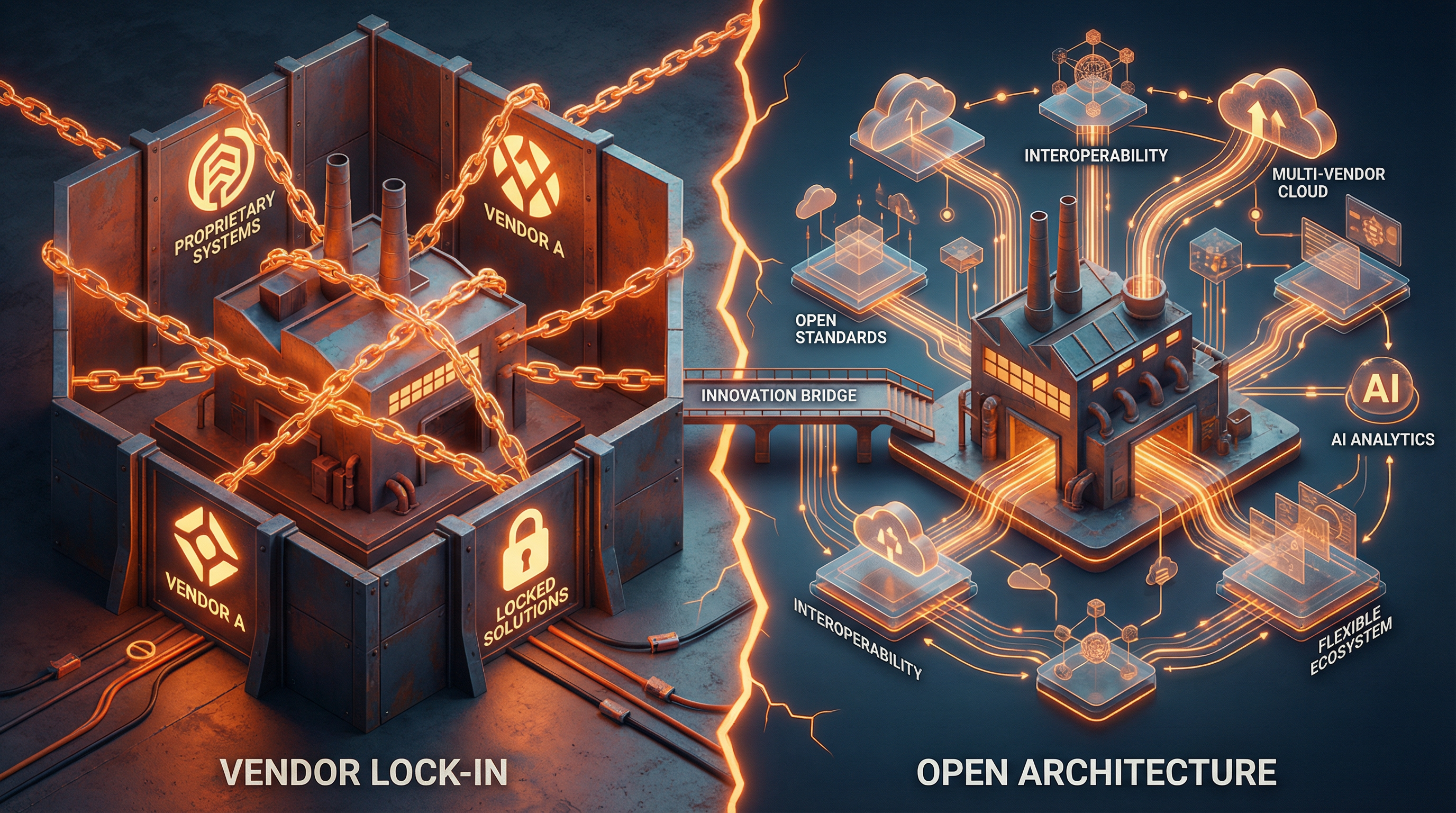
Lock-in in manufacturing AI is rarely the result of a single decision. It accumulates through a series of reasonable choices that individually seem efficient but collectively eliminate optionality. The progression follows a predictable path.
- Data gravity — production data is ingested into the vendor's storage layer. Moving terabytes of time-series sensor data to another platform becomes a migration project in itself
- Proprietary connectors — machine integrations use vendor-specific drivers and protocols. Replacing them means rebuilding connectivity from scratch for every PLC, SCADA system, and test machine
- Model format lock — trained models are stored in proprietary formats or depend on vendor-specific runtime environments. Exporting them to standard frameworks like ONNX or PMML is either unsupported or lossy
- Workflow dependencies — data preprocessing, feature pipelines, and deployment logic are built using vendor-specific tools with no interoperability standards
- Pricing escalation — once switching costs are high enough, the vendor adjusts pricing with confidence that migration is too expensive to be a realistic alternative
For manufacturers running AI across multiple plants, the stakes multiply. A locked-in architecture at one site means every subsequent site inherits the same constraints — regardless of whether that vendor's tools are the best fit for the local equipment, process requirements, or regional data regulations.
The Case for Open Architecture
A vendor-agnostic approach doesn't mean building everything from scratch. It means choosing platforms that are designed around open standards and interoperability rather than proprietary lock-in. The principle is straightforward: the manufacturer should own the data, own the models, and retain the freedom to integrate any best-in-class tool at any point — without re-engineering the foundation.
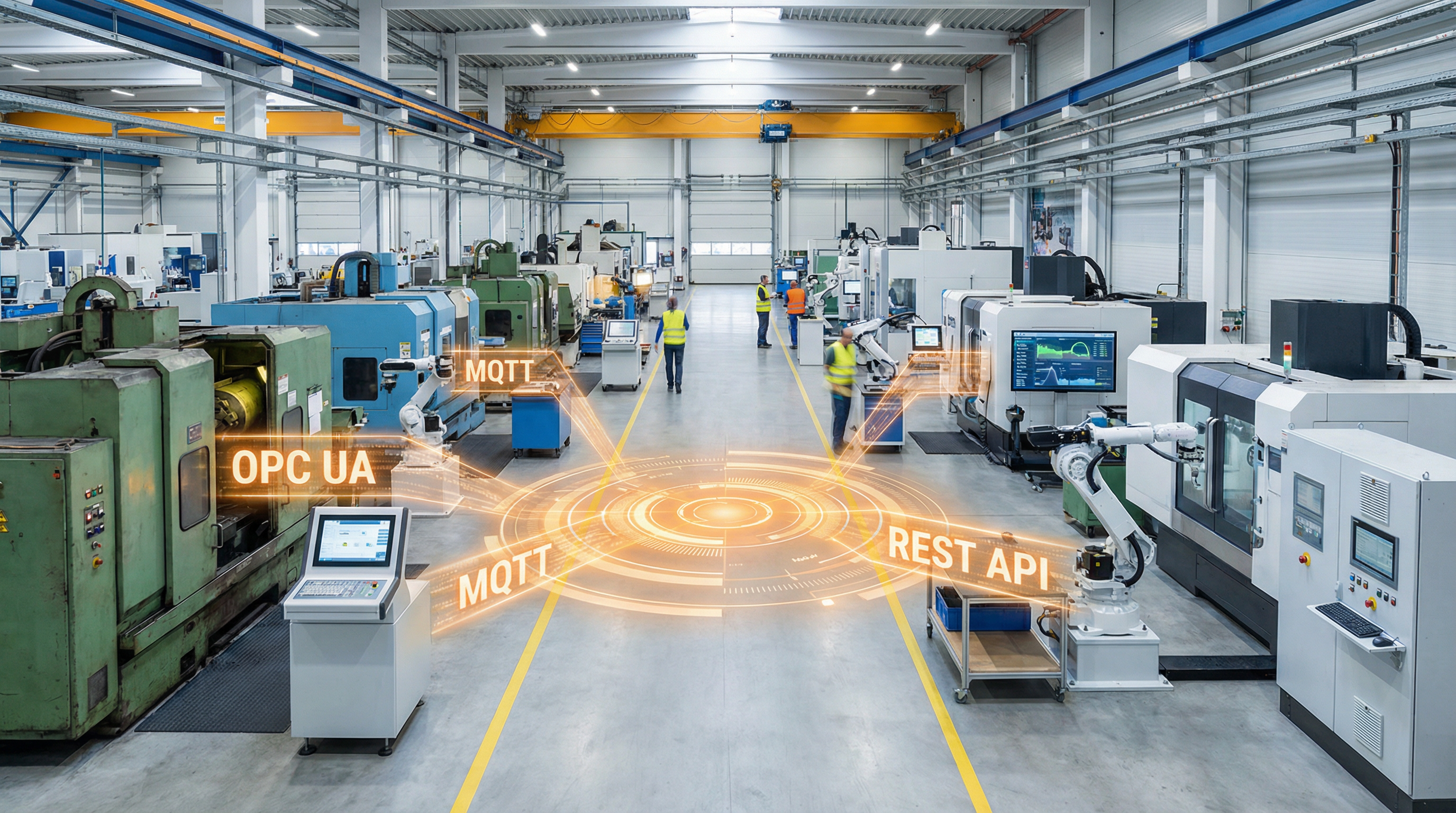
In practice, this means several things. Data should be stored in open formats that any system can read. Machine connectivity should use standard industrial protocols like OPC UA and MQTT rather than proprietary drivers. Trained models should be exportable in standard formats. APIs should follow documented specifications that allow third-party tools to connect without vendor involvement. The platform provides the orchestration layer, but it does not create walls around what it orchestrates.
Freedom to Evolve
The AI landscape is evolving rapidly. The best computer vision library today may not be the best one in two years. New edge computing hardware emerges constantly. Regulatory requirements shift, sometimes requiring data to stay on-premises rather than in a specific cloud. A manufacturer locked into a single ecosystem cannot respond to these changes without major re-platforming effort. A manufacturer on an open architecture simply swaps in the better component and keeps running.
At RockQ, we built the platform on this principle deliberately. The platform connects to any machine through standard industrial protocols. Data stays in the manufacturer's control — on-premise, in their cloud, or in a hybrid setup. Models trained in the ML Studio export to standard formats. Third-party AI services, custom Python scripts, and specialized tools integrate through open APIs. If a customer finds a better anomaly detection library, they plug it in. If they need to move from one cloud provider to another, their data and models go with them. The platform's value lies in orchestration, not captivity.
Vendor lock-in is not a technical inevitability. It is a design choice made by platform vendors who benefit from dependency. Manufacturers evaluating AI platforms should ask a direct question: if we want to leave in three years, what exactly would that involve? The answer reveals whether the platform is a foundation for long-term innovation or a trap that gets more expensive to escape with every use case deployed. Manufacturing AI investments span decades. The architecture should be built to last just as long — without being chained to a single vendor's roadmap.