

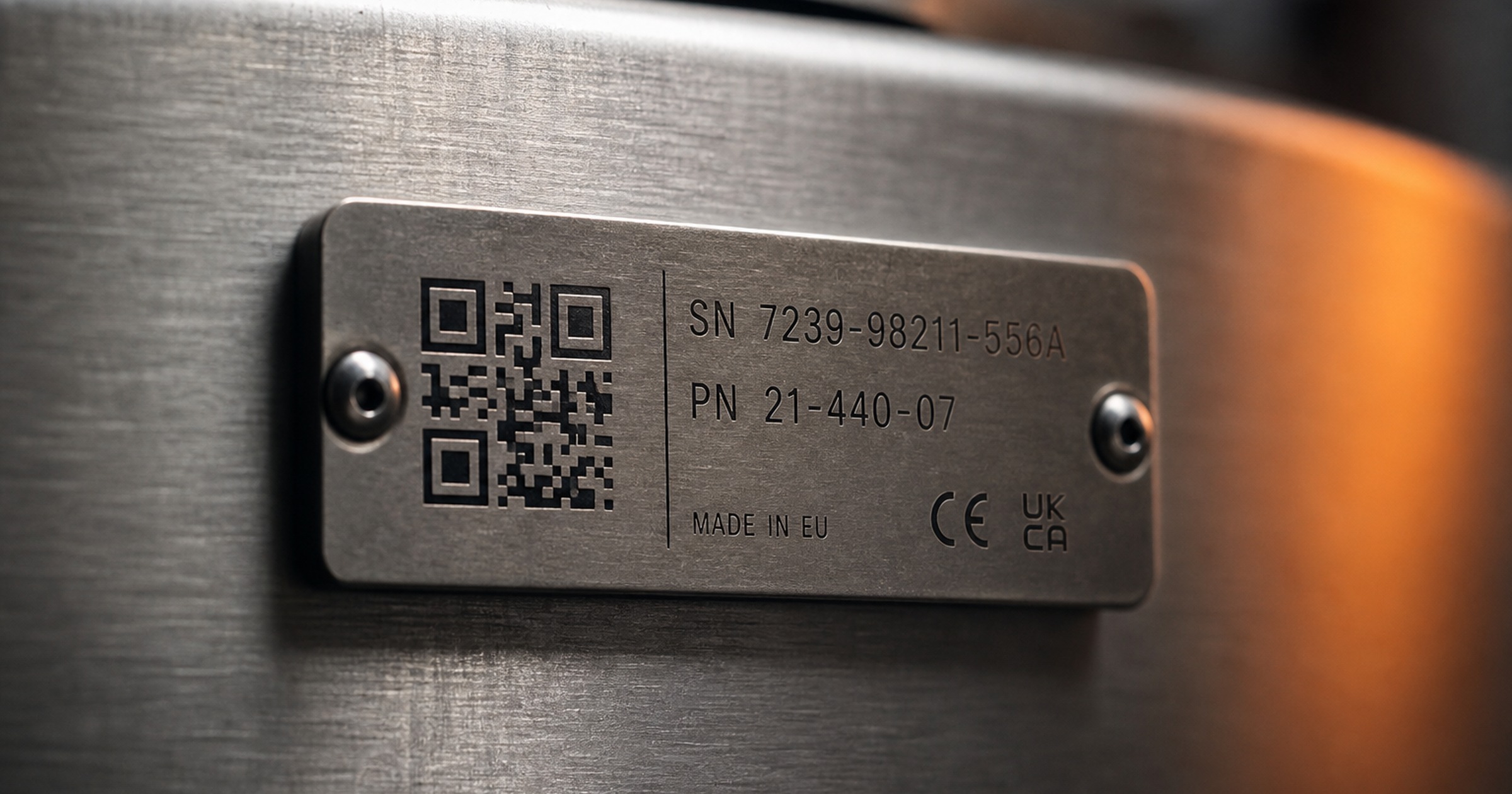
If you make physical products in or for the European Union, the next two years will reshape what your data has to look like. The change has a name. It is the Digital Product Passport (DPP), and it is the operational core of the EU's Ecodesign for Sustainable Products Regulation (ESPR), in force since 18 July 2024.
The headlines have called it a "QR code on every product." That description is technically correct and almost completely useless. The QR code is the doorbell. The system behind it is the actual change.
What the Digital Product Passport actually is
A Digital Product Passport is a structured digital record that travels with a physical product through its entire lifecycle. Anyone in the value chain — regulators, recyclers, repair technicians, business customers, and in many cases end consumers — can scan it and read information that the manufacturer is required to keep accurate and up to date.
What goes in it depends on the product category, but most passports will contain:
- A unique product identifier and its manufacturing origin
- Material composition, including hazardous substances
- Information about repair, spare parts, and disassembly
- Recycled content and recyclability data
- Carbon footprint and other environmental metrics, where relevant
- Compliance data for the rules that apply to that product family
Crucially, the DPP is not a static label. It is a living record connected to a backend system that has to be queryable for the entire economic life of the product, including long after it leaves the factory.
The dates that matter
ESPR entered into force on 18 July 2024. The Commission's first working plan, published in April 2025, set the priorities through 2030. The deadlines that are already on the calendar:
- Mid 2026: The central EU DPP registry goes live. The Commission has indicated this as the operational backbone for all future product passport data.
- February 2027: The battery passport becomes mandatory under the EU Battery Regulation, the first product-specific passport with a hard deadline.
- 2027 and beyond: Delegated acts will roll out passports for textiles, iron and steel, aluminium, electronics, furniture, tyres, detergents, paints, lubricants, and chemicals — in roughly that order.
This is not a future regulation. The framework is law. The first deadlines are in months, not years.
What this means for a manufacturer in practice
Most factories already collect a lot of the data the DPP will require. The problem is rarely that the information does not exist. The problem is that it lives in seven different systems, owned by four different teams, in formats that were never designed to be queried by a regulator with a phone.
To meet the DPP standard, a manufacturer typically needs five things in place:
- A reliable unique identifier per product instance. Often a serial number or batch ID, anchored consistently across MES, ERP, and quality systems.
- A bill of materials that includes upstream supplier data. Not just "what we put in," but "what our supplier says they put in," with traceable evidence.
- A way to connect production records to a product instance. Which line, which shift, which raw material lot, which test results.
- A persistent backend that can answer those queries for years after the product has left the gate.
- An access policy for who is allowed to see what. Full data for regulators, more limited data for consumers, role-based access for service technicians and recyclers.
Three common misconceptions
"It is a sustainability label." The DPP carries sustainability data, but it is not a label. It is an audited dataset with legal weight. Inaccuracy is a compliance issue, not a marketing issue.
"It only matters if we sell to consumers." The first wave of passports targets B2B-heavy sectors. Steel, aluminium, batteries, industrial textiles. If you supply into a regulated value chain, your customer's DPP obligations become yours.
"We have years to plan." The battery passport mandate is February 2027. Building the data foundations behind a DPP, especially for products with long supplier chains, typically takes 12 to 24 months. The companies that wait until the deadline is visible miss it.
Where to start
The first useful question is not "which DPP solution should we buy?" It is "can we already answer the questions the DPP will ask, today, for the products we are shipping right now?"
If the answer is yes, the rest is a packaging exercise. If the answer is no — and for most plants it is — the work to do is data work, before it is regulatory work. Connecting the systems that already hold the answers, normalizing the identifiers, and putting a queryable layer on top.
That work is not glamorous. It does not make a launch slide. But it is what separates the manufacturers that will spend 2027 calmly explaining their products to a registry from the ones that will spend it explaining themselves to a regulator.
The Digital Product Passport is, in the end, a forcing function. The regulation gives a deadline to a question European industry has been postponing for a decade: knowing, with confidence and on demand, what is in the things it makes.