

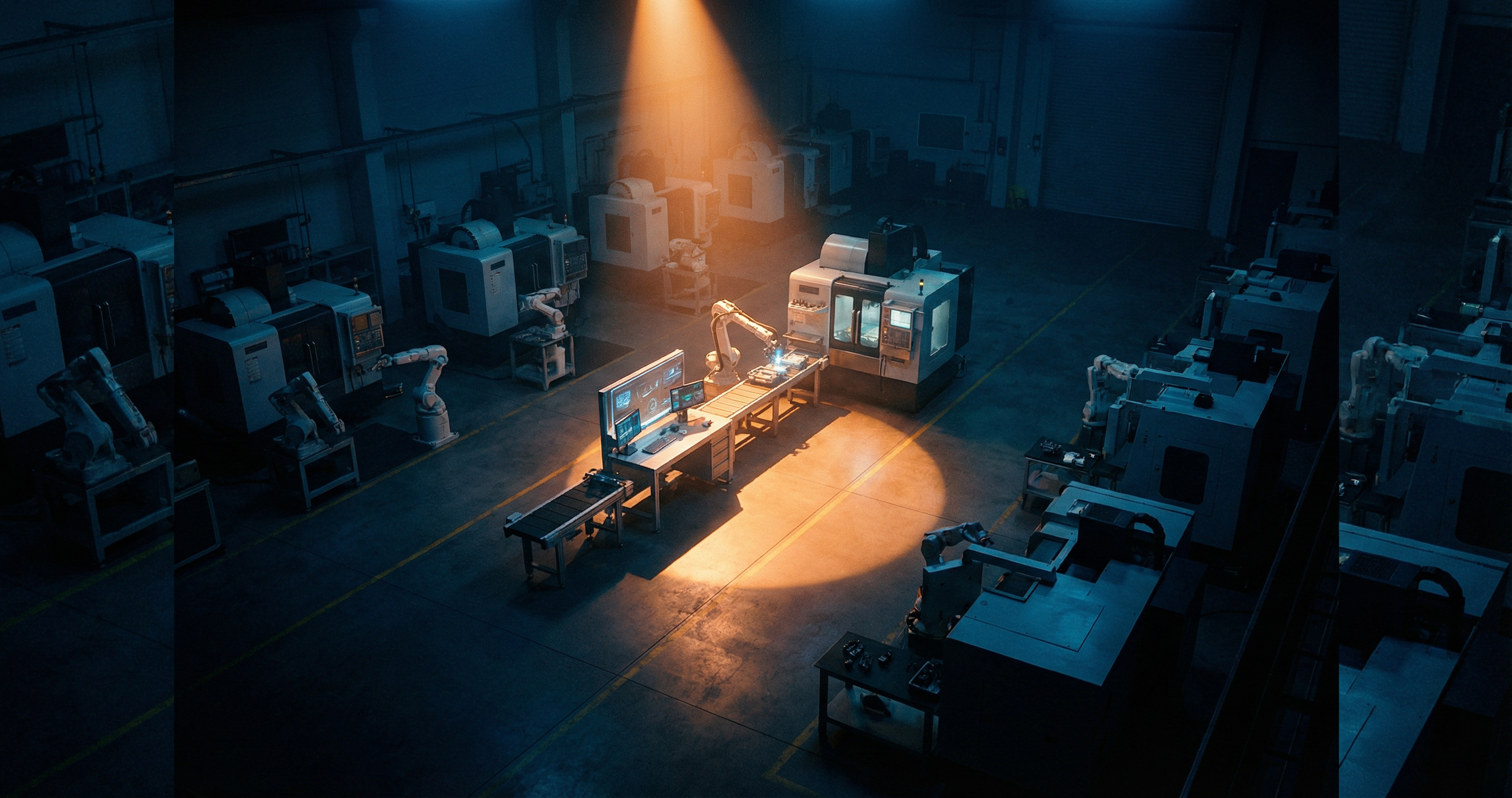
The phrase "Smart Factory" has been on conference slides for a decade. Yet most manufacturers who set out to build one end up with the same outcome: a collection of disconnected pilots, a stretched IT budget, and very little to show on the shop floor. The problem isn't ambition. It's approach.
Too many Smart Factory programs are framed as sweeping transformation initiatives. Leadership announces a multi-year roadmap. Consultants map out dozens of use cases across every department. A massive RFP goes out, a platform is selected, and then — nothing moves for months. The scope is too broad, the dependencies too tangled, and the first meaningful result is always just around the corner.
Why Big-Bang Transformation Stalls
The big-bang model assumes you can plan and execute a factory-wide digital overhaul in parallel. In theory, this sounds efficient. In practice, it collides with manufacturing reality: production cannot stop, budgets are approved in cycles, and every department has its own priorities. When the initiative requires coordinated change across maintenance, quality, logistics, and production simultaneously, the result is organizational gridlock.
There's also a subtler problem. Large programs create large expectations. When the first tangible results take 18 months to materialize, stakeholder confidence erodes. Budget reviews become harder to defend. The initiative quietly loses momentum — not because it was wrong, but because it tried to do everything at once.
Picking the Right First Use Case
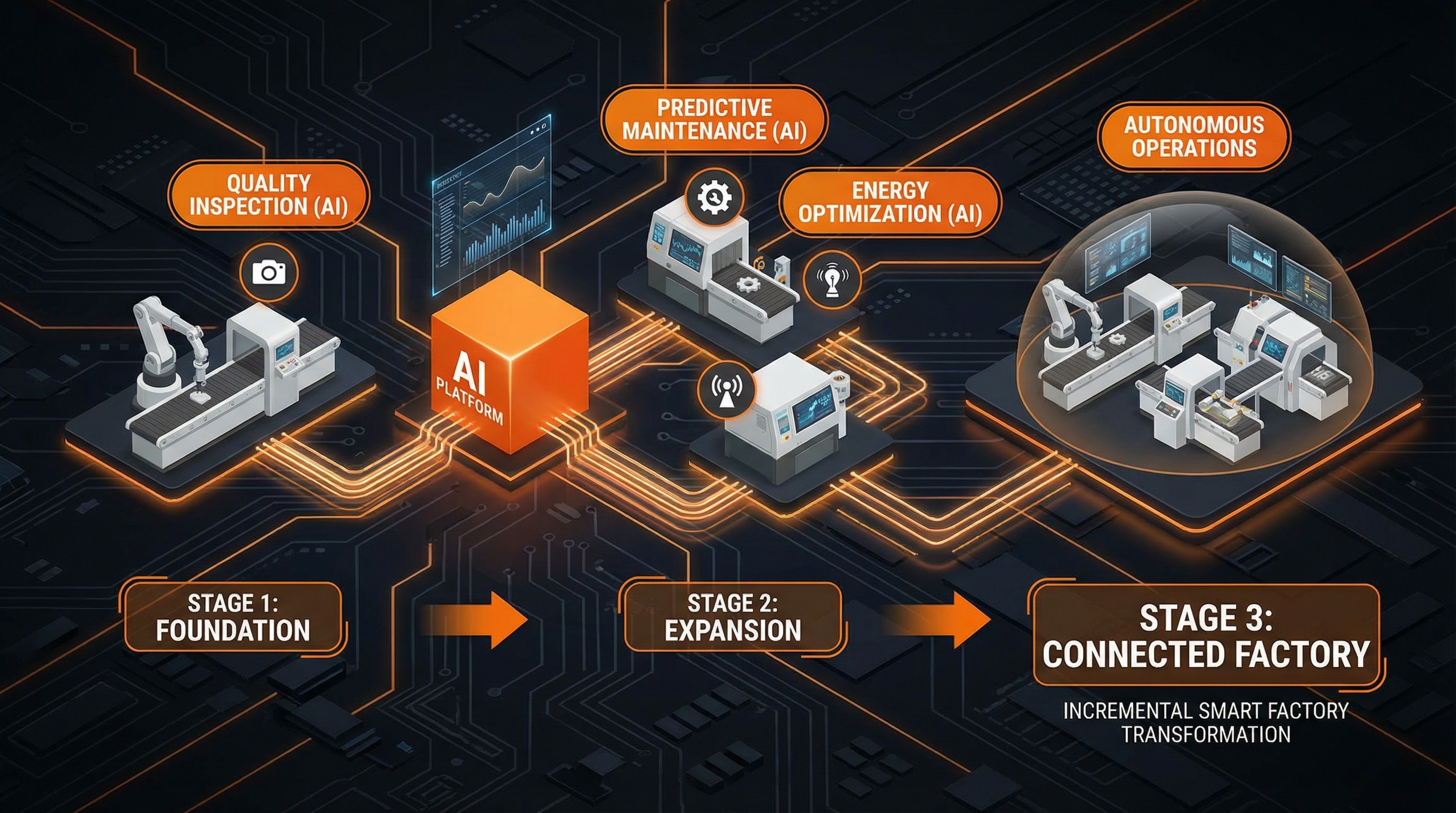
The companies that succeed with Smart Factory initiatives share a common pattern: they start with one well-chosen use case, deliver results quickly, and use that success to build momentum. But "start small" doesn't mean "start with whatever is easiest." The first use case needs to meet specific criteria:
- Measurable business impact — scrap reduction, downtime avoidance, or throughput gain that finance can verify
- Data availability — the signals you need already exist, even if they're not yet connected
- Operational urgency — the people on the shop floor actually want this problem solved
- Containable scope — one line, one process, one shift — something that can be deployed in weeks, not quarters
A good first use case might be vibration-based anomaly detection on a critical CNC machine, or automated defect classification on a packaging line. The key is that it delivers undeniable value within a defined boundary, and it proves that the underlying platform works.
The Shared Platform Foundation
Here's where the strategy becomes a scaling pattern. If the first use case is built on throw-away scripts and one-off integrations, it stays an isolated pilot forever. But if it's built on a shared platform — one that handles connectivity, data normalization, model training, and deployment — then every subsequent use case inherits that foundation. The second project takes half the time. The third takes a quarter.
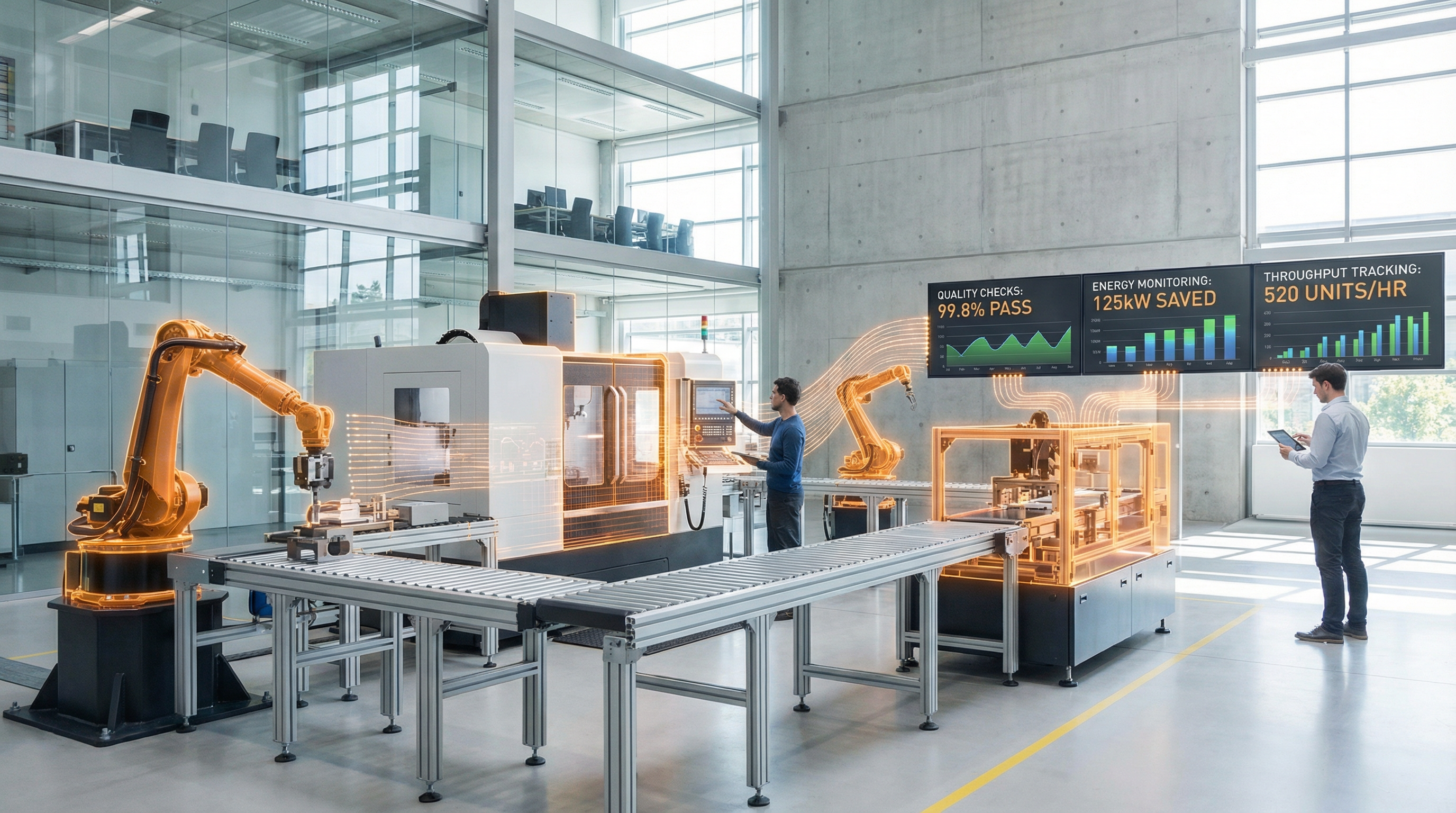
At RockQ, this is exactly how we've designed the platform. Connectors built for the first use case are reusable. Data pipelines are composable. ML models trained in the integrated Studio deploy through the same mechanism every time. The infrastructure investment compounds instead of restarting with every new project. This is what separates a Smart Factory strategy from a collection of experiments.
The Smart Factory isn't a destination you reach after a three-year program. It's an operating model you build incrementally — one proven use case at a time, on a foundation that scales. Start where the pain is sharpest, deliver value fast, and let the results fund what comes next.