

There is a recurring pattern in manufacturing AI projects that rarely gets discussed openly. A process engineer identifies a clear opportunity — say, reducing scrap from a welding cell by correlating wire feed speed with shielding gas flow. The logic is obvious to anyone who has spent time on the line. But turning that insight into a working solution requires navigating IT backlogs, writing specification documents, and waiting months for development resources. By the time the project starts, the original urgency has faded and organizational momentum has moved elsewhere.
This isn't an IT failure. It's a structural problem. Manufacturing organizations have built deep specialization into their teams: business units understand the process, IT understands the systems, and neither speaks the other's language fluently. Every AI initiative must cross this divide, and the translation layer between the two sides is where most projects lose speed, accuracy, or both.
The Translation Layer Problem
When a process expert wants to build a data-driven solution, the typical path looks like this: write a requirements document, present it to IT, wait for prioritization, clarify misunderstandings during development, test outputs that don't quite match the original intent, then iterate. Each cycle takes weeks. The requirements document itself is a lossy compression of domain knowledge — nuances about machine behavior, process windows, and failure modes get flattened into bullet points that a developer interprets differently than the author intended.
The result is predictable. Solutions arrive late, don't fully match the process reality, and require additional rounds of refinement. For straightforward reporting tasks, this friction is tolerable. For AI use cases — where the quality of data selection, feature engineering, and contextual filtering directly determines whether a model works — it's fatal. A data scientist building a predictive quality model cannot afford to misunderstand which signals matter during tool changeover versus steady-state production. That distinction lives in the process engineer's head, not in any specification document.
No-Code Collapses the Gap
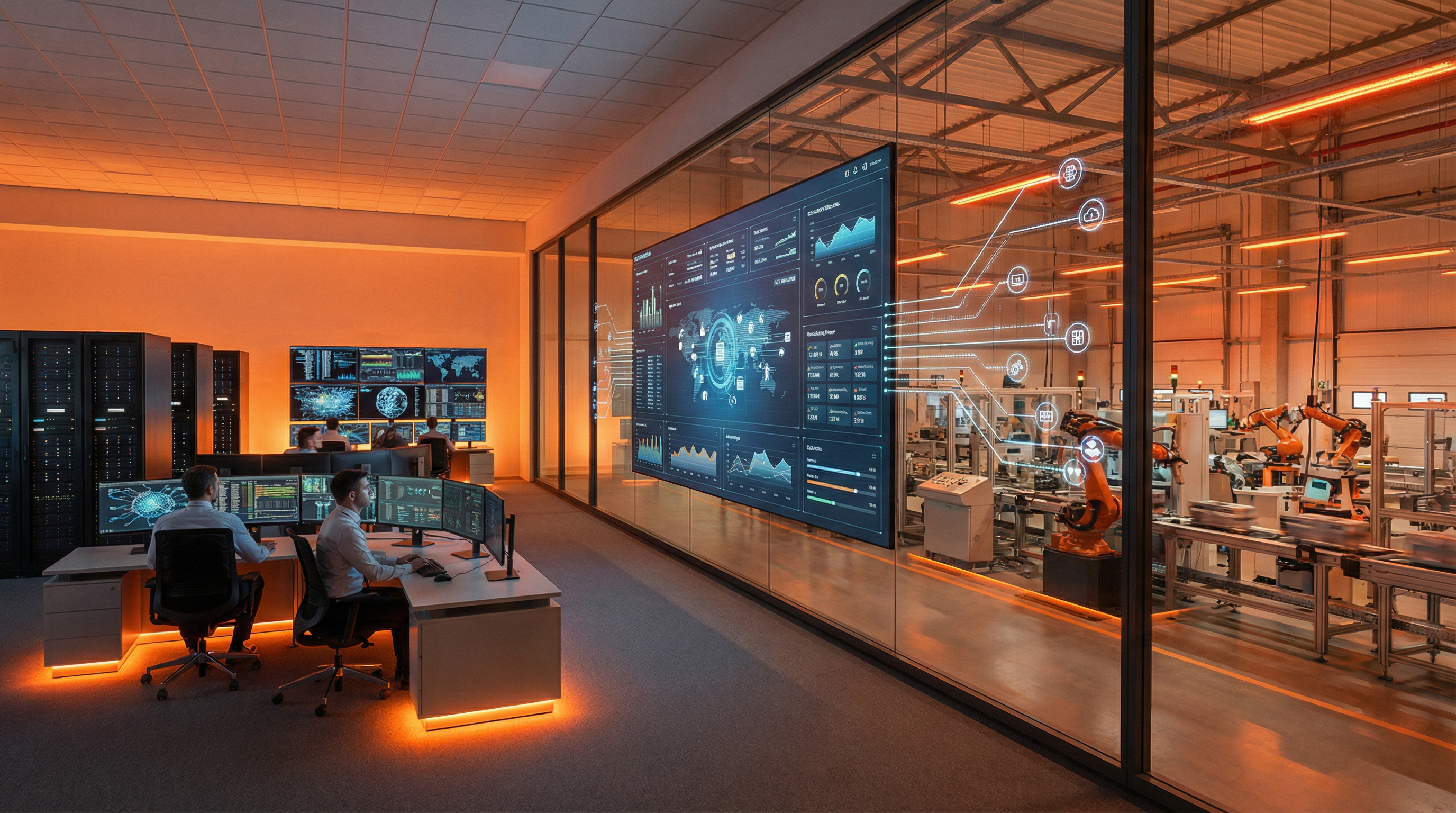
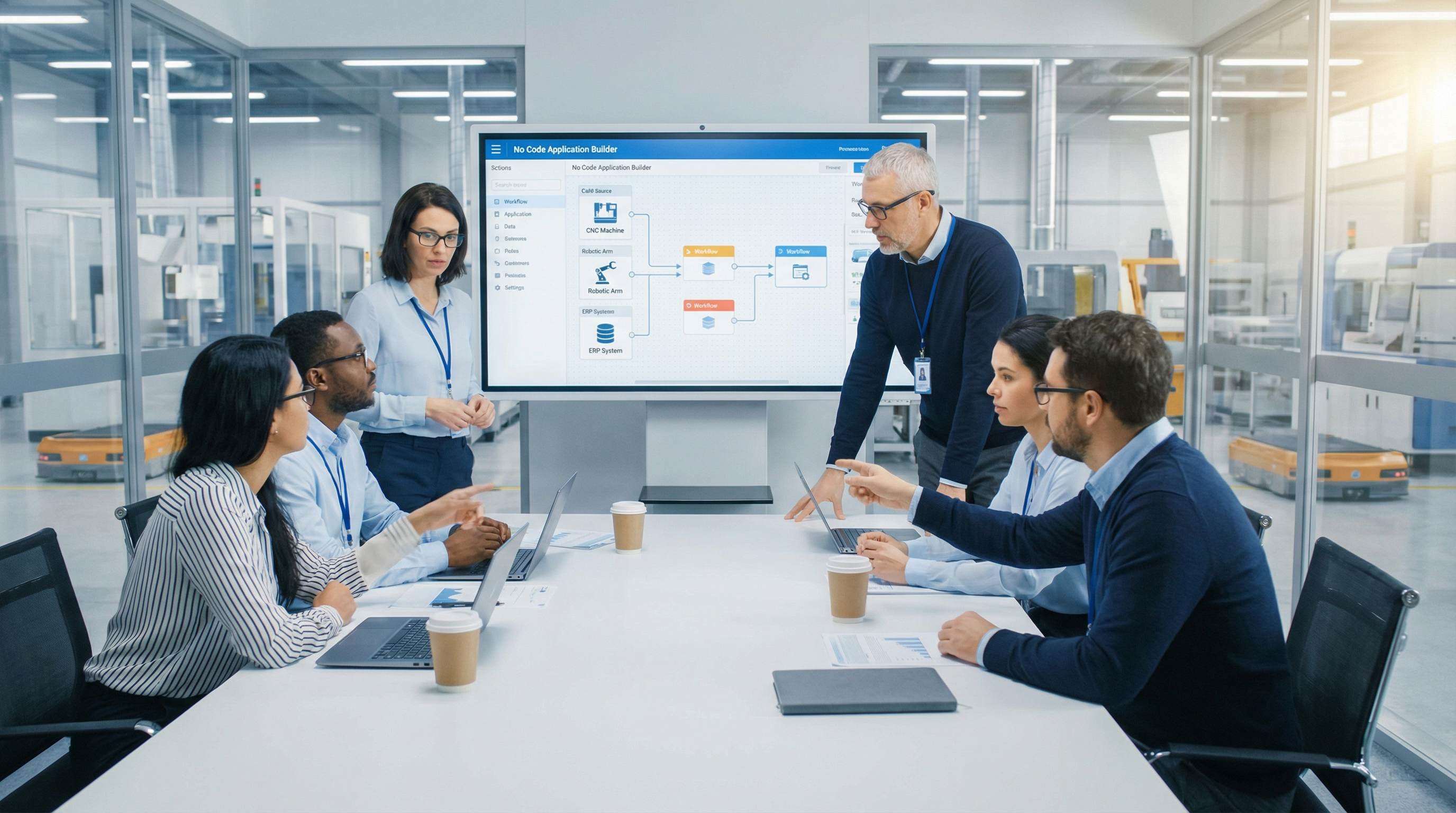
No-code platforms fundamentally change this dynamic by removing the translation step entirely. Instead of describing what they need in a document and handing it off, process engineers build the solution themselves — visually connecting data sources, defining logic, configuring dashboards, and even training ML models through guided workflows. The person who understands the process is the same person who builds the application. Domain knowledge flows directly into the solution without lossy handoffs.
This is not about replacing IT. It's about reallocating work to where it belongs. Process engineers handle what they know best: which signals to monitor, what thresholds matter, how to interpret anomalies in context. IT focuses on what they do best: infrastructure security, system integration, network architecture, and governance policies. The platform becomes the shared layer where both sides operate with clear boundaries.
- Process engineers gain autonomy to prototype, test, and iterate on AI use cases without waiting for development cycles
- IT teams retain full control over data access policies, deployment environments, and security configurations
- Project timelines compress from months to weeks because the feedback loop between idea and working prototype shrinks dramatically
- Model accuracy improves because the person selecting features and labeling data actually understands the manufacturing process
Governance Without Gatekeeping
A common objection to no-code in manufacturing is that it creates shadow IT — ungoverned applications built outside of established processes. This concern is valid in environments where no-code means spreadsheets and ad-hoc scripts. But a purpose-built industrial platform handles governance architecturally. Role-based access controls determine who can connect which data sources. Deployment pipelines enforce testing before production. Audit logs track every change. IT defines the guardrails; process engineers operate within them.
The real risk isn't giving process experts the tools to build solutions. The real risk is the status quo: slow iteration cycles, misinterpreted requirements, AI projects that stall in the handoff between business and IT, and a growing backlog of use cases that never get implemented. Manufacturing is full of people who understand their processes deeply. No-code gives them a direct path from insight to action — without compromising the operational stability that IT is responsible for protecting.