

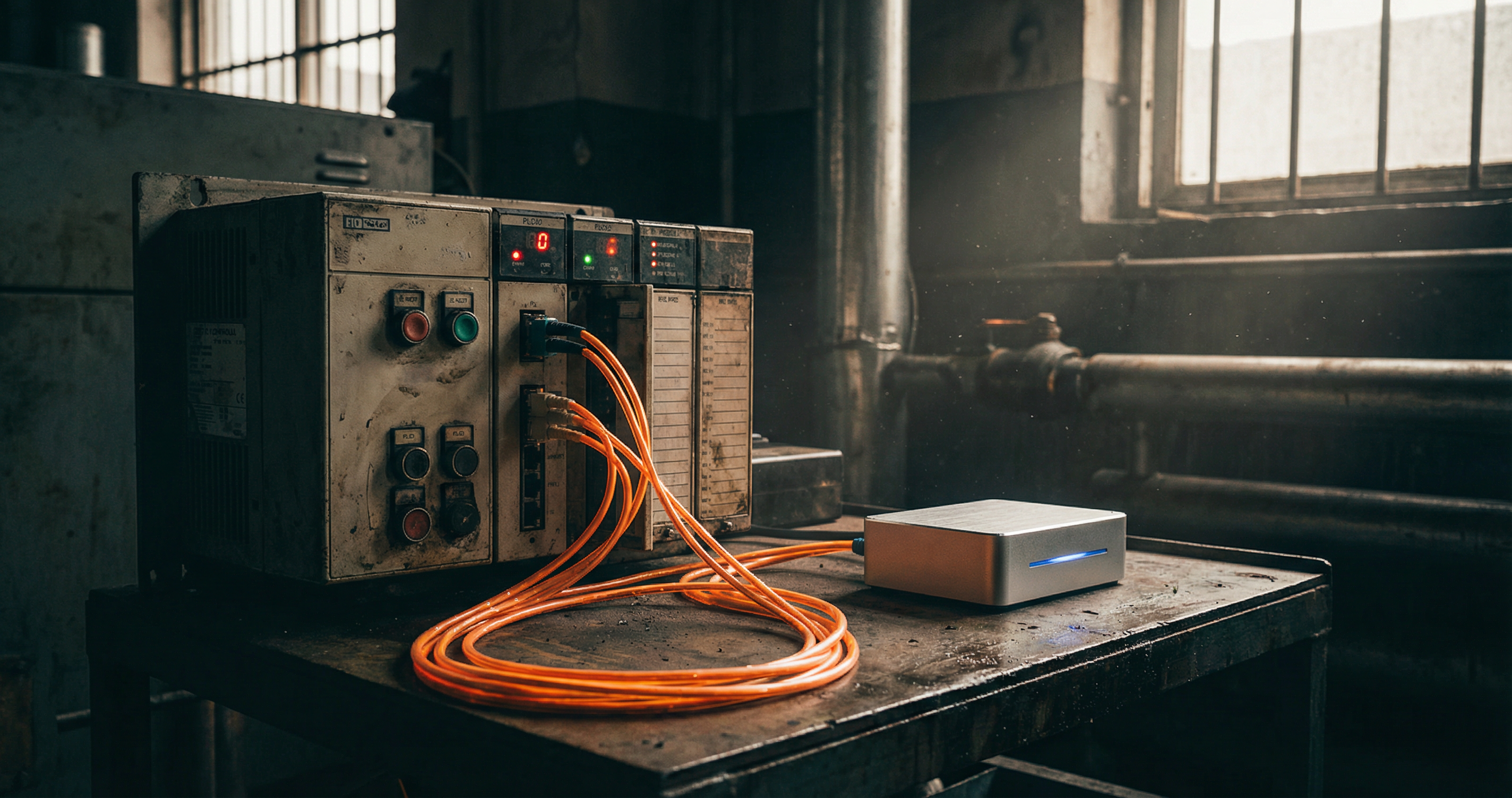
There's a persistent myth in manufacturing digitalization: that legacy equipment is the primary obstacle to AI adoption. Walk into any boardroom discussion about smart factory initiatives and someone will point to the 20-year-old injection molding press or the vintage grinding machine and declare, "We can't do AI until we replace those." This is fundamentally wrong.
A machine doesn't need a modern controller to produce useful data. A motor draws current. A spindle vibrates. A hydraulic press exerts measurable force. These physical phenomena generate signals regardless of whether the machine was built in 1995 or 2025. The signal is there. The question is whether anyone is listening.
The Real Problem: Silos, Not Vintage
The actual barrier to manufacturing AI isn't the age of the equipment — it's the isolation around it. Legacy machines run in closed ecosystems. Their data, if accessible at all, stays locked inside a proprietary controller or a local HMI. No one built an API. No one planned for cross-system analytics. Each machine is an island, and the gap between islands is where AI potential goes to die.
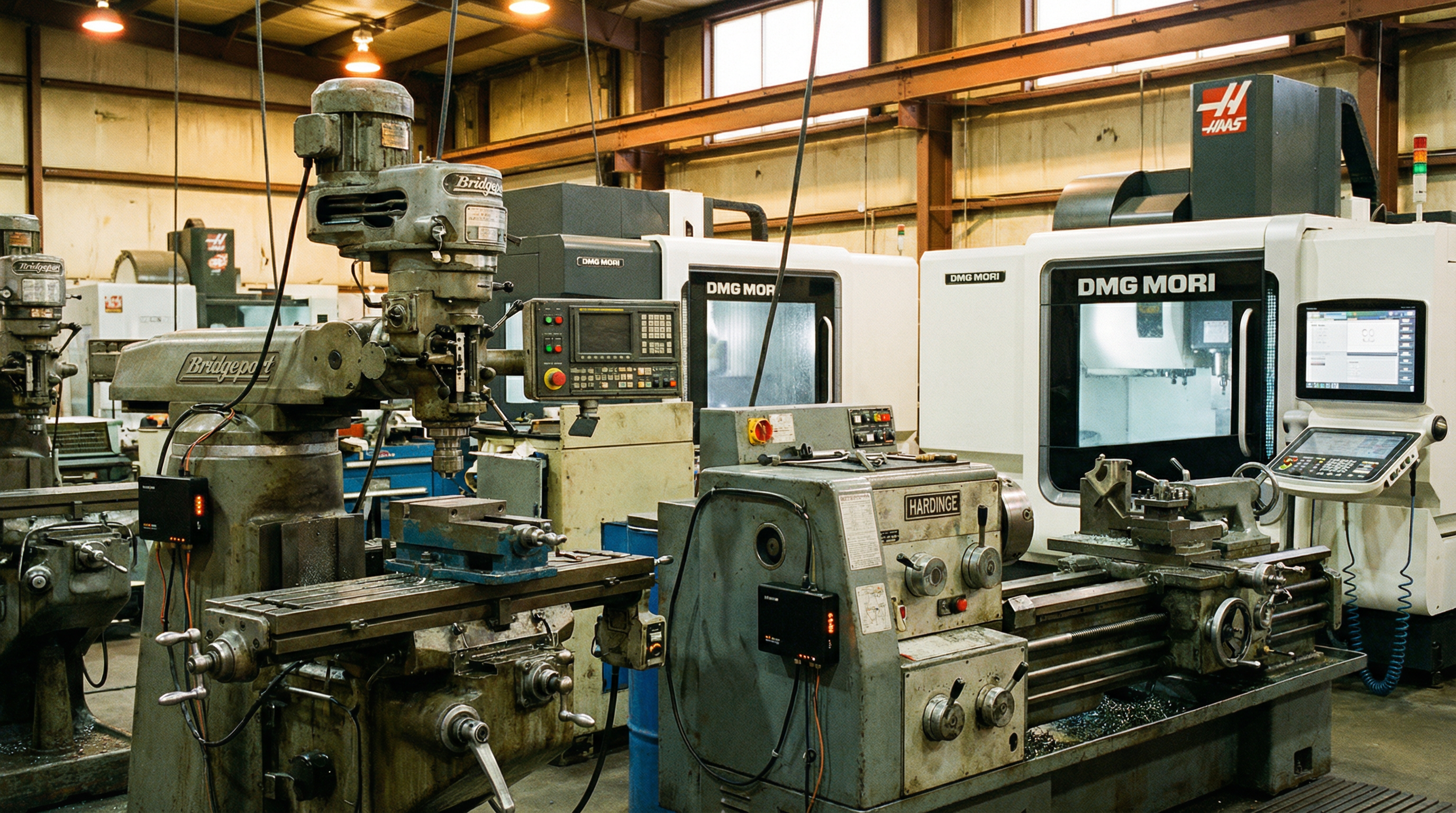
But this isolation isn't unique to old machines. Even brand-new equipment often arrives as a silo. A 2025 CNC machine from one vendor doesn't natively share data with a 2025 robot cell from another. Modern doesn't automatically mean connected. The silo problem is an architecture problem, not an age problem.
Consider what actually matters for AI:
- Signal availability — does the machine produce measurable physical or electrical signals?
- Signal quality — are the signals stable, repeatable, and representative of the process?
- Contextual data — can we associate signals with production events, batches, or operating modes?
- Connectivity — can we extract the data without disrupting the machine's operation?
A well-maintained legacy machine often scores surprisingly well on the first three criteria. It's only the last one — connectivity — that requires a solution. And that solution exists today.
Bridging Old and New Without Disruption
Non-invasive connectivity is the key to unlocking legacy equipment for AI. This means reading signals without modifying the machine's control logic, without interrupting production, and without voiding warranties. Techniques range from tapping into existing fieldbus communication and reading PLC registers directly, to adding external sensors for current, vibration, or temperature measurement where digital signals aren't available.
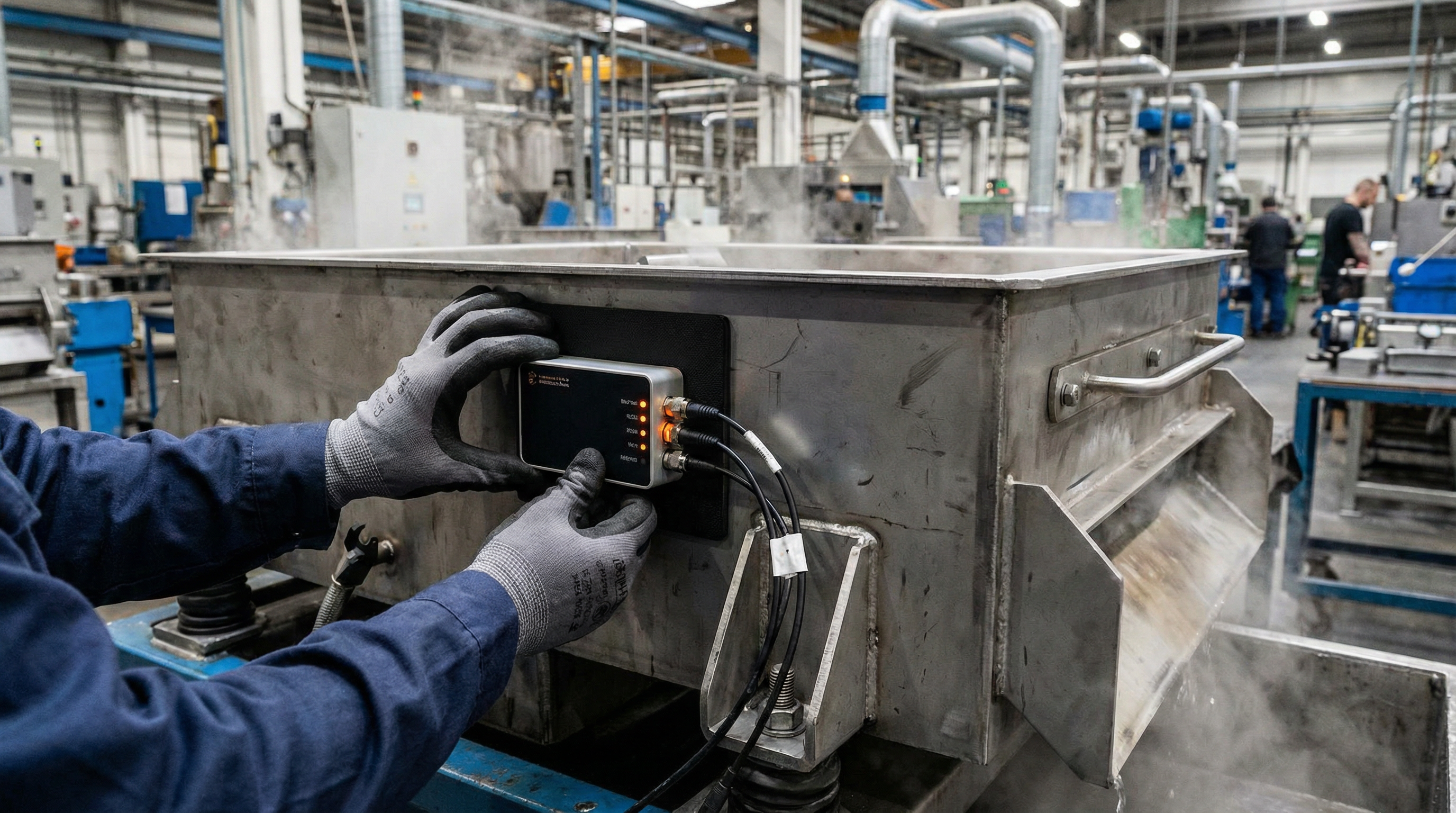
At RockQ, our platform treats every machine the same regardless of age. A connector to a Siemens S5 PLC from the 1990s normalizes data into the same unified layer as a connector to a modern OPC UA server. The downstream application — whether it's a predictive maintenance model, a quality analytics dashboard, or an energy optimization workflow — sees no difference. Old machines and new machines contribute equally to the data foundation.
From Brownfield Liability to Strategic Asset
The most successful smart factory transformations we've seen don't start with rip-and-replace. They start by connecting what exists. A 30-year-old hydraulic press with a current sensor and a vibration pickup becomes a source of predictive maintenance data. A legacy PLC with no network interface, once connected through a serial-to-Ethernet gateway, delivers cycle time and fault code data that feeds OEE dashboards.
Manufacturers who wait for a greenfield opportunity to start their AI journey are waiting for a moment that may never come — or that comes too late. The brownfield is the reality. The equipment on the floor today, old and new, is the asset. The only thing missing is the thinking that connects it all into a single, intelligent system. Replace the silos, not the machines.